



 Facebook
 Reddit
After François Truffaut's audacious debut in 1959 with the semi-autobiographical The 400 Blows (Les Quatre Cents Coups), which won him Best Director at Cannes, his second film could hardly have been more different. Shoot The Pianist (Tirez sur le Pianiste) is a pastiche of American film noir, loosely based on David Goodis's pulp fiction Down There. When his third movie, Jules Et Jim, a year later, was such a critical and popular success, confirming Truffaut as the leading light of the Nouvelle Vague, Shoot The Pianist was somehow forgotten.
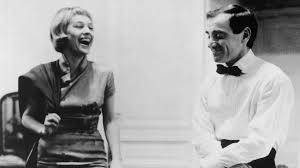
In many ways it is an odd mixture that hangs separately, but never together. Charles Aznavour's central performance is perfectly downplayed as the concert pianist who gives it all up after his wife (Nicole Berger) kills herself because of his infidelity. He changes his name from Eduard Saroyan to Charlie Kohler and hides out in a Parisian bar, where he is employed to tinkle the ivories with a three-piece combo. One evening his brother Chico (Albert Remy) turns up in a state of agitation, on the run from a couple of joke gangsters, drawing Charlie into something he doesn't understand, nor want any part of.
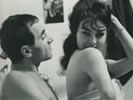 The film evolves into a rambling flashback, with the use of Charlie's voice over narration, which changes surprisingly at one point into that of Lena (Marie Dubois), a waitress at the bar, who loves him. The editing throughout is erratic, with some scenes going on far too long, although Truffaut's use of natural exteriors is very similar to what Jean-Luc Godard had just done in À Bout De Souffle.
Because of the way the story unfolds, in sections and in no particular order, it is difficult to follow. Who are these idiot bad guys? Why is everyone running about all over the place? Truffaut's attempt at humour doesn't fit the undercurrent of menace.
Bad guy: "If I lie, let my mother die." Shot of old lady, in pinnie and hand knits, clutching her chest and falling over.
The final sequence in the snow, out in the country, is both farcical and memorable. Whatever is missing - gangsters with dirty faces, rather than homburgs and pipes, would help - the sheer exuberance of a young filmmaker trying anything and everything, having the courage to make mistakes, is immensely attractive, as are the performances of Aznavour and Dubois.
Reviewed on: 08 Oct 2006

If you like this, try:
Review preview for Breathless
A visually innovative film... Godard has done a masterful job, and his witty script never struggles to hold audience attention.
Review preview for Hitchcock/Truffaut
Hitchcock/Truffaut has the intriguing aura of a first episode with all the questions answered easily producing 500 more to be asked.